
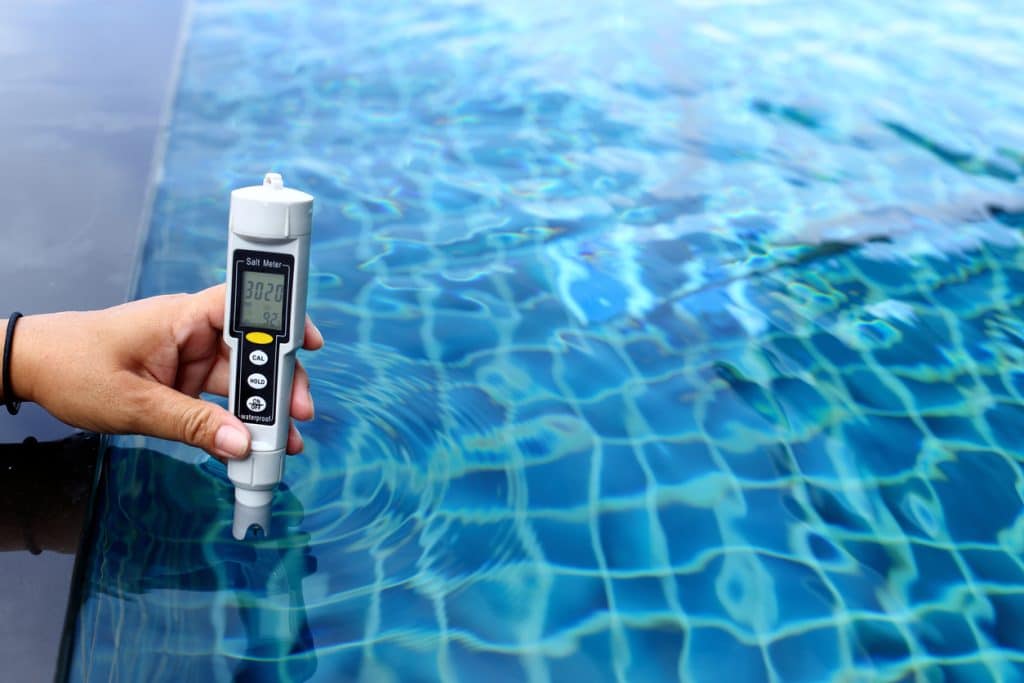
One of the must-do tasks when it comes to pool maintenance is to test the water at least once a week or more often if your pool is enjoyed frequently. Testing the water lets you know if it’s healthy to swim in and which chemicals to add if it’s not up to par. There are three common ways to test your pool water.
Liquid Test Kits
In these tests, you add a reagent to water you collect from your pool. The color the water turns lets you know how much of a certain chemical is in your water. Liquid test kits are considered very accurate if they’re used properly.
Test Strips
Most pool owners use test strips to check their pool water. This is probably because they’re inexpensive and very easy to use. They’re just dipped in your swimming pool, and you interpret the resulting colors.
Digital Readers
These readers use electrodes to check your water directly. You can also use them with test trips or reagents.
Before you test, set the pool’s pump on high, and let it run for at least an hour. Then collect the water from more than a foot deep. Follow the test instructions, record what you find, and keep it handy.
What Test Kits Check For
It’s important that the chemicals in your pool water are balanced. They not only make the water sparkling and clear but safe and comfortable to swim in. Here are what test kits test for.
pH
This is a measure of how acidic or alkaline the pool water is. If the pH in a pool is too high, bacteria will thrive. If the pH is too low, the water becomes more acidic. Acidic water can corrode metal parts (ladders, pumps, heaters) and damage pool surfaces like plaster or vinyl. It can also irritate skin and eyes.
Free Available Chlorine
This kills pathogens and sanitizes the water overall. Maintaining the proper level of free available chlorine ensures the pool remains safe and prevents the growth of harmful bacteria and algae.
Bromine
This also sanitizes your pool but is gentler than chlorine.
Total Alkalinity
This keeps the pH of the pool stable and prevents damage to the pool and its equipment.
Calcium Hardness
This prevents corrosion and protects against limescale.
Cyanuric Acid
This chemical prevents chlorine from being destroyed by sunlight.
Phosphates
There should be no phosphates in your pool water because algae eats them.
Metals
All water has at least a small amount of metal, but too much can discolor the pool water, eat away at equipment and even turn swimmers’ hair green.
Total Dissolved Solids
The amount of these should be between 0 and 2500 parts per million in non-saltwater swimming pools.
No matter what time of year, you’ll always want your pool to be safe, healthy and fun for you and your guests. This is why you shouldn’t hesitate to call in a pool professional if you’re not sure if you can test the water yourself. If you’re in need of pool cleaning and maintenance, get in touch with our professionals at PB Pool Doc in Palm Beach, Florida.